

-

Properties & Applications
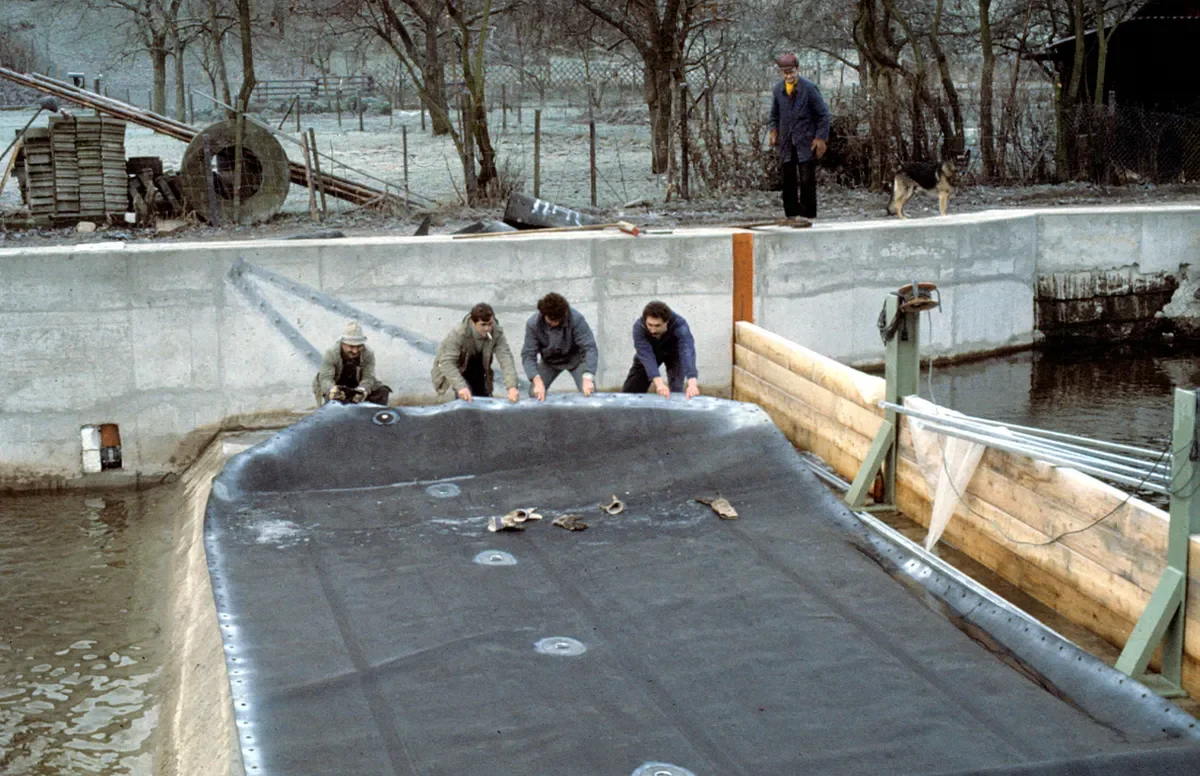
Inflatable rubber dams are variable dam barriers with a number of advantages over traditional constructions. The simple construction design with no movable parts (such as swivel joints) along with a plain shape of the concrete structure ensure low maintenance requirement of the dam. Any forces created are distributed evenly in the concrete foundation easing the reinforcement planning and the mounting on an existing dam structure. Mounting is possible on any vertical, inclined or twisted dam walls or curved or bent dam crests. What is more, due to their low construction height, rubber dams integrate harmoniously into the landscape. Repair and/or exchange of the rubber bladder is generally completed within a few days or weeks. Rubber dams are low-cost, adaptive and reliable barriers offering numerous application options.
-

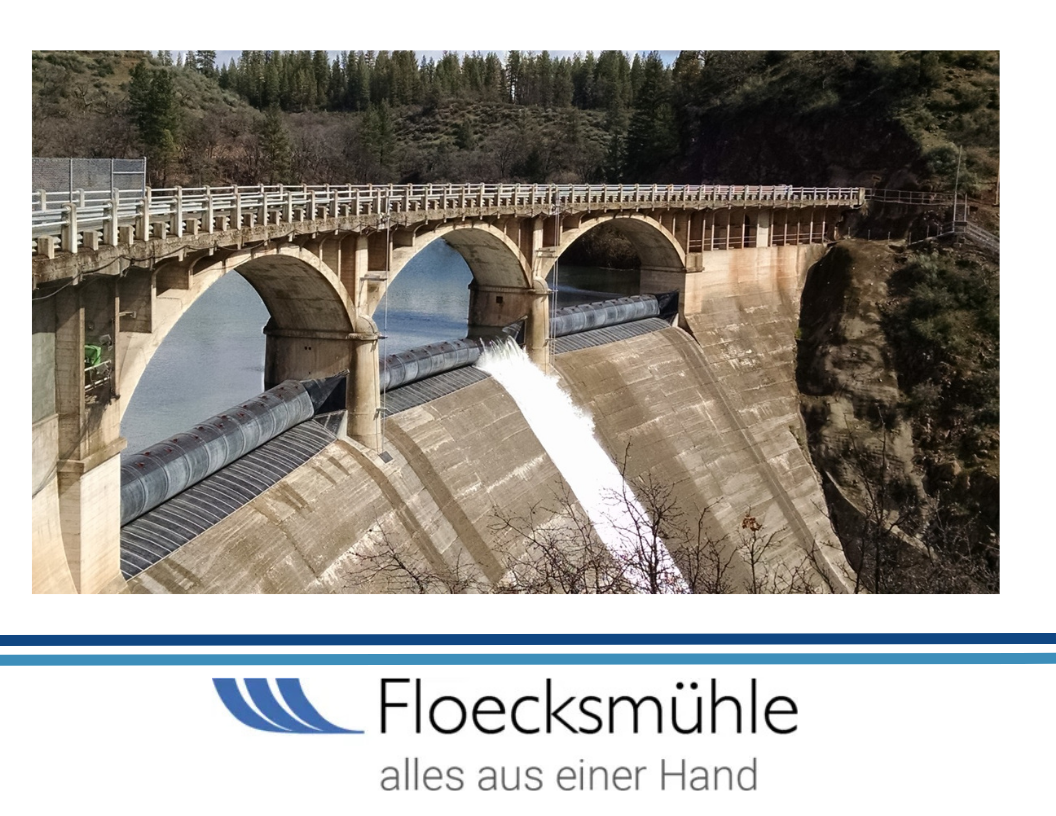
Rubber dams can be used for a variety of purposes. When used for hydropower purposes, rubber dams retain the water for optimal use of the power-generating turbines. In coordination with the turbine’s capacity utilization the rubber dam allows to maintain the retention set point in a large variety of discharge scenarios. In addition, rubber dams are used to extend the storage capacity of existing dams. In this way the turbine capacity may be increased quickly and at low costs.
Precise water level control is very important when the dam is used for navigation (shipping) purposes. Rubber dams ensure that the retention set point is observed with narrow tolerance. For this use the automatic control system developed by Floecksmühle has proved especially effective.
-

Rubber dams work as relief dams when used in the context of flood protection, for instance by integration in a dike. Thus polders or flooding areas may be flooded in a controlled manner. Due to their quick and easy operation as well as robust construction type, rubber dams also find application as mobile flood protectors. In the context of coastal protection rubber dams are used as storm tide barriers.
In the agricultural area rubber dams are used for retaining water for ground irrigation. Other applications are water storage for the direct watering of plants. Especially in regions with long dry periods rubber dams can be put to use for extending the water storage capacity so water supply is ensured on a continuous and economic basis.
Rubber dams also allow to separate sea water from fresh water in coastal regions. The bladder may be used with fresh water as well as sea water and brackish water. A special design also permits damming from the downstream side. This is the reason why rubber dams have proved efficient also as a barrier against sea water intrusion in agricultural coastal regions.
-

Air-filled rubber dam for ground irrigation purposes or direct watering of plants
Rubber dams are used in sewage systems for water regulation, waste water retention and for rinsing the sewer system.
In combined sewer systems, part of the water from heavy rains must be stored to ensure that the sewage plant’s capacity is not exceeded. By installing an inflatable gate, the sewage duct can be used as an intermediate reservoir.
Requirements such as operational safety, adaptability to the sewer, dirt-proof and corrosion-proof design and remote controllability are all fully met by rubber dams.Due to their flexibility and high operational safety, rubber dams can be used for a very large variety of purposes. Other possible applications are water sports, ecological water scene structuring, provision of cooling water and urban planning. Rubber dams can be customized to almost any particular application.
-

Inflatable sewer gates offer several advantages:
They can easily be installed in existing sewage water systems.
The simple design of inflatable gates requires low maintenance.
Electro-mechanical components can be installed in easily accessible operating shafts.
Existing sewage ducts can be used as buffer reservoirs for sewage water.
-
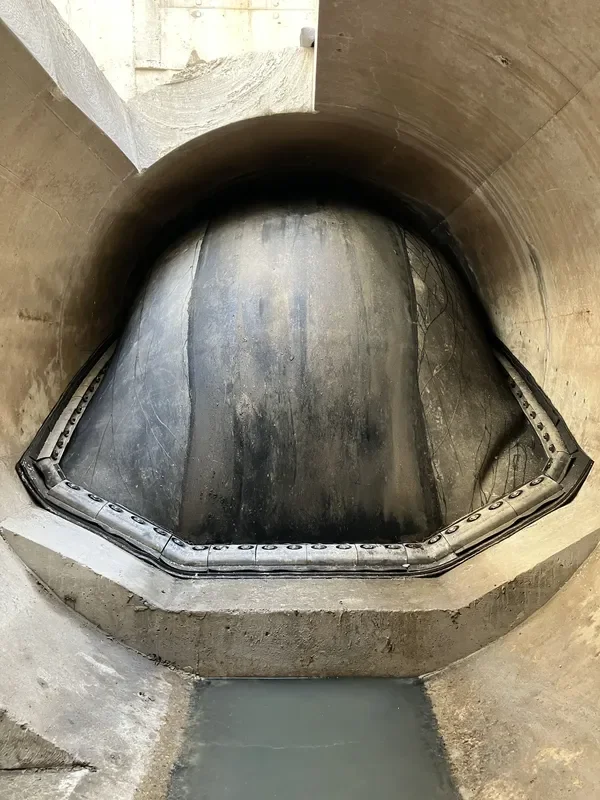
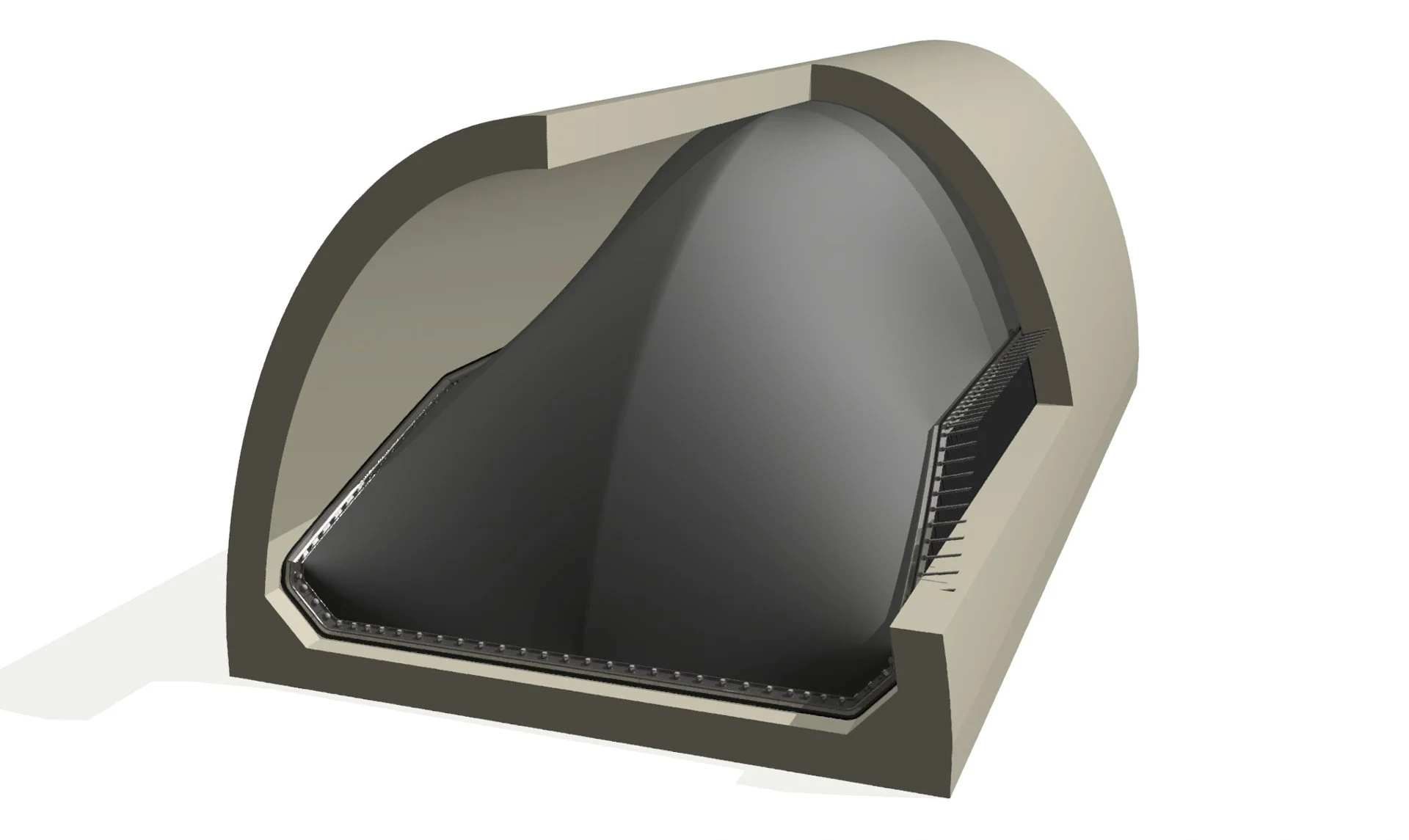
Inflatable sewer gates are installed in sewage ducts of combined sewage systems.
In combined sewage systems, rain water and wastewater are channeled together to the water treatment plant. As the collector duct and the water treatment plant are designed for a limited capacity, part of the sewage water from heavy rains must be stored temporarily to ensure that the water treatment plant’s capacity is not exceeded.
The installation of inflatable sewer gates allows the use of the existing sewage duct as an intermediate reservoir. The discharge volume passing across the inflatable sewer gates can be regulated in such way that the capacity of the connected sewage treatment plants is not exceeded.
Inflatable sewer gates are generally designed as air filled rubber gates. Depending on the design, the complete cross section of the sewage duct can be closed.
-
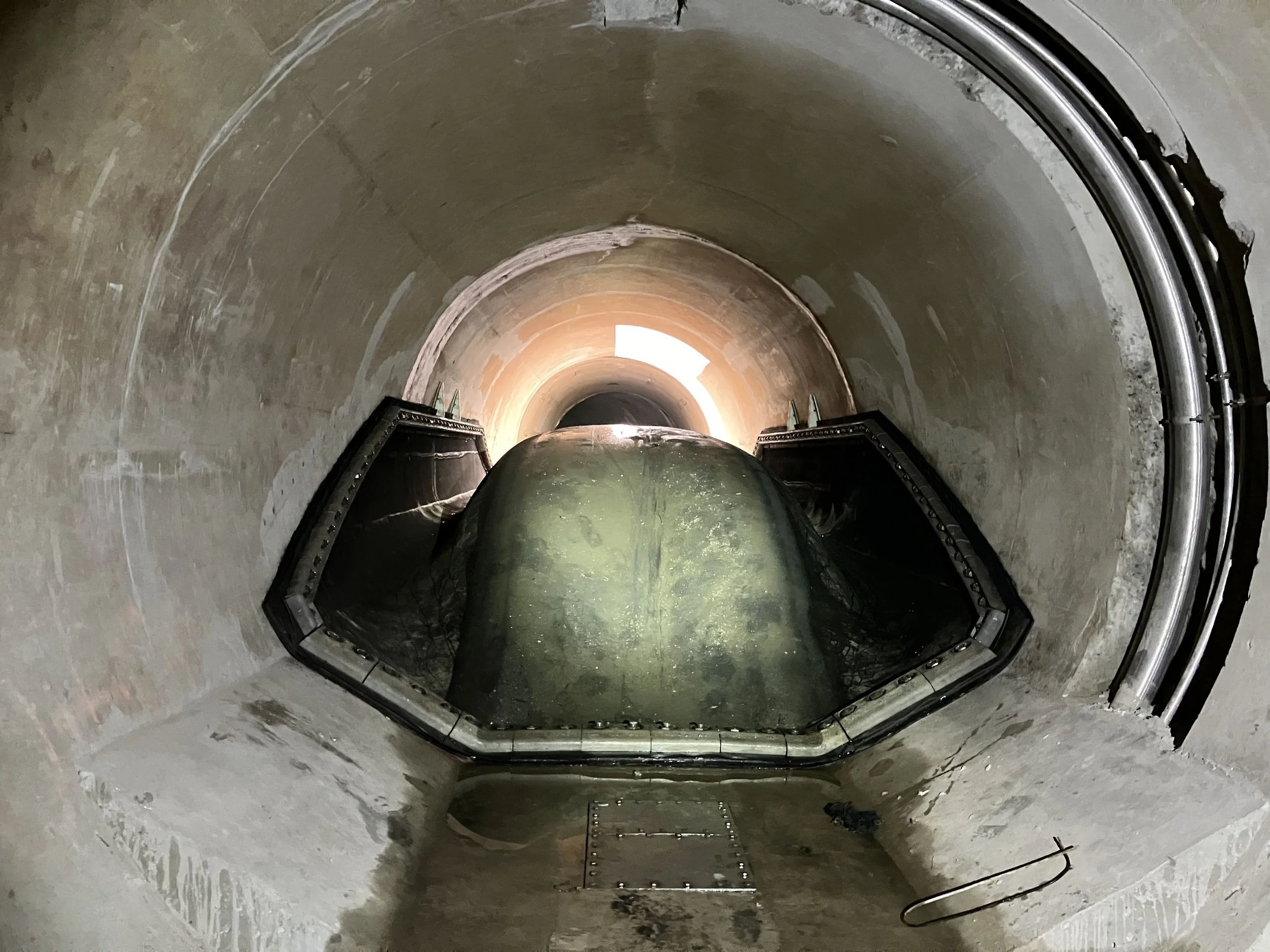
Sewer gate in partial raised position at Beaconsfield in Detroit, USA